

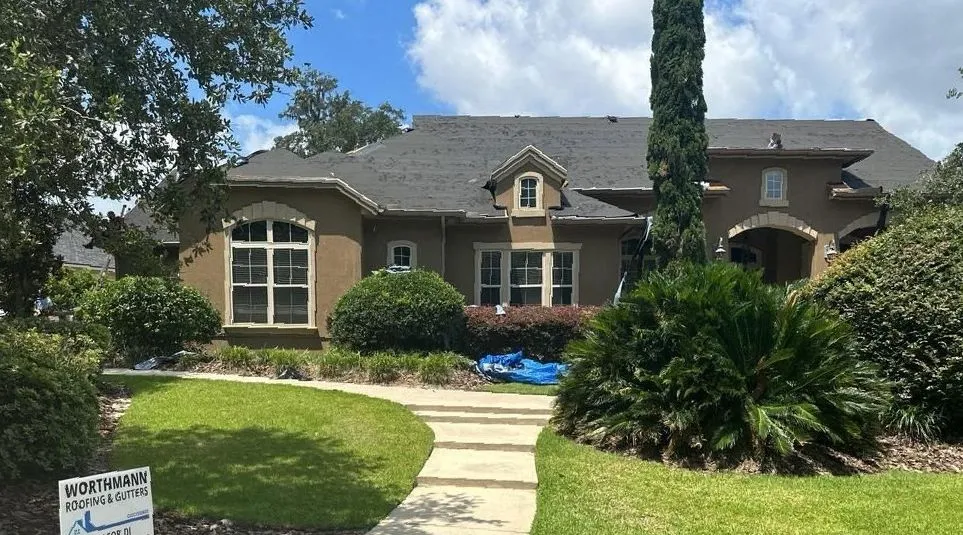
In Gainesville, roof performance is about standing up to Florida’s heat, humidity, and storm-season winds. That’s why more homeowners are considering hip roofs for both new builds and roof replacements.
Known for their structural strength and all-around slope design, they offer a practical solution for weather protection and long-term durability.
If you’re weighing your options between hip, gable, or even dutch gable designs, this guide will walk you through what makes hip roofs uniquely suited to life in North Central Florida—starting with the basics.
Key Takeaways
- A hip roof has four sloping sides that protect better against strong winds than gable or flat roofs.
- Good drainage, balanced structure, and better energy control make hip roofs a smart choice for Gainesville homeowners.
- Installation takes planning, local materials, and licensed contractors to meet Florida codes and Gainesville’s weather conditions.
- Regular gutter cleaning, ridge checks, and attic ventilation keep a hip roof strong through Florida’s heat and storms.
What Is a Hip Roof?
A hip roof is a type of roof design where all four sides slope downward from a central ridge, meeting at corners with smooth transitions.
This creates a self-bracing, aerodynamic shape that offers better wind performance in areas like Gainesville. In contrast to a gable roof, which only has two slopes and exposed vertical sides, a hipped roof surrounds the structure.
Whether you’re deciding between a mansard roof or a hip and valley roof, understanding what a hip roof is will help you make an informed decision as a Gainesville homeowner.
Steeply Pitched Slopes Resist High Winds in Gainesville
Gainesville’s location in a city frequently affected by strong tropical weather makes roof wind resistance a top priority. The steeply pitched slopes of hip roofs naturally deflect high-speed wind, distributing pressure across all roof planes.
Unlike homes with a gable or clipped gable design, where one or two sides bear the brunt of a storm, a hip roof offers more balanced protection.
This is especially valuable for houses in neighborhoods like Longleaf or Cobblefield, where tree cover and open exposure vary widely. For locals comparing roof styles, the unique benefits of a hip roof often make it the preferred choice.
Four Roof Planes Boost Drainage and Reduce Debris Buildup
Each roof plane on a hip roof works together to direct rain and debris toward the gutters, minimizing buildup that can lead to leaks or algae. Gainesville homes with square hip roofs or pyramid roofs benefit from this natural runoff—especially in low-lying areas like Porters Community or neighborhoods near Bivens Arm.
Compared to roof styles like the tented roof or gable roof, which rely on only two roof planes, hip roofs outperform in heavy-rain conditions common in Florida.
When all slopes meet efficiently, Gainesville homeowners experience fewer water issues and less maintenance long-term.
Better Structural Support From Diagonal Bracing
In hip roof construction, diagonal bracing is essential to strengthen connections where roof planes meet. This method results in improved stability compared to roofs requiring less diagonal bracing, such as a gable or small gable structure.
Gainesville’s mixed soil types—from the sandy areas of NW 43rd Street to the clay-rich zones near Payne’s Prairie—make strong framing even more important.
A square structure like a hip roof evenly distributes structural loads, reducing stress on walls and ensuring that the build holds up through seasonal storms.
Less Attic Space, but Better Insulation Potential
One downside to hip roofs is less attic space, particularly compared to a gable roof, which provides more attic space due to its open triangular configuration. That said, Gainesville homeowners often prioritize energy efficiency over square footage above the ceiling.
Hip roofs create compact zones ideal for controlled airflow, making it easier to optimize attic ventilation. This is critical during humid summers or sudden cold snaps, which can stress older HVAC systems.
If you’re retrofitting an older structure, the thermal efficiency of a hip roof often outweighs the storage limitations of limited attic space.
Subtle Curb Appeal Through Symmetry and Uniform Lines
Whether in new construction or renovations, hip roofs enhance curb appeal thanks to their symmetry and proportion.
Neighborhoods like Arbor Greens or the Oak Hall area feature many hip roof homes with smooth, cohesive lines that blend well with Florida’s diverse roofing materials. Unlike a jerkinhead roof or half hip roof, which introduces asymmetry, hip roofs maintain visual balance that fits well with stucco, stone, or brick exteriors.
For Gainesville homeowners seeking elegance without excess, hip roofs offer style and strength without compromising on function.
What to Consider Before Installing a Hip Roof in Gainesville
Material Selection Matters in Florida’s Climate
Florida’s year-round sun, rain, and seasonal storms demand high-performance roofing materials. In Gainesville, metal roofing, asphalt shingles, and tile are frequently used for hip roofs. Each material reacts differently to heat, humidity, and wind.
For example, homes near Hogtown Creek may require mold-resistant shingles, while elevated homes in Oakmont benefit from reflective tile.
The national average cost of roofing may not reflect Gainesville’s regional labor and weather considerations—always opt for a local contractor familiar with area-specific challenges.
Framing Complexity Requires Experienced Contractors
Framing a hip roof in Gainesville means connecting multiple roof planes, often intersecting at hips, valleys, and ridges. This is more intricate than framing a gable roof, which consists of only two slopes.
Contractors must account for load distribution, ventilation channels, and compatibility with soffits and dormers. The local permitting process also requires compliance with wind uplift standards, making professional framing non-negotiable.
Choose a licensed, GAF-certified contractor like Worthmann Roofing to get the job done right.
Proper Ventilation and Natural Light Integration
Ventilation must be designed with care in a hip roof due to the absence of gable vents. This means that ridge vents, soffit systems, or mechanical exhaust must be factored in.
Adding skylights or sun tunnels is an effective way to introduce natural light, especially when attic space is limited.
For Gainesville residents concerned with indoor humidity, proper venting helps manage mold and extends the life of insulation, wood, and HVAC systems. Good airflow also results in better ventilation—essential during Florida’s long warm seasons.
Higher Upfront Cost, but Long-Term Value
Compared to simpler designs, hip roofs involve more materials, labor, and design planning, contributing to a higher cost. But for homeowners in Gainesville, that cost is justified by durability, storm resilience, and energy savings.
If you’re researching Florida cities ranked for weather-related insurance claims, you’ll find Gainesville among those that benefit most from proactive design.
While a new roof with a hip style may cost more upfront, it reduces emergency repairs and replacement frequency—making it a smart investment for long-term home protection.
What to Know About Hip Roof Maintenance in Gainesville
Keep Gutters and Valleys Clear During the Rainy Season
Frequent rain in Gainesville means that gutters on hip roofs must stay clean and functional. The roof planes guide water to valleys that must remain unclogged. If not maintained, water can seep beneath the roofing materials, causing long-term structural issues.
Residents in forested areas like NW Gainesville should schedule seasonal cleanings to prevent debris buildup from surrounding oaks and pines.
Inspect for Uplift and Ridge Integrity After Major Storms
After every storm or high-wind event, Gainesville homeowners should inspect the ridge, hip intersections, and edges for signs of stress. Because hip roofs have no vertical gable sides to brace against wind, pressure accumulates along the ridge and hips.
Pay attention to uplift damage or cracked shingles around areas where slopes meet, particularly after tropical storm surges or hurricanes.
Watch for Mold in Less-Ventilated Attic Corners
Due to their enclosed nature and the reduction in gable vents, hip roofs can trap heat and moisture in hard-to-reach corners.
In Gainesville’s humid climate, this creates pockets ripe for mold growth.
Monitoring attic space and adding mechanical venting in older structures can help avoid costly interior weather damage. Proper insulation and strategic airflow keep mold from developing unseen behind walls or ceilings.
Schedule Professional Inspections Annually
With Gainesville’s unpredictable weather and high humidity, a hip roof should be professionally inspected at least once a year. Roofing professionals will examine everything from surface wear to diagonal bracing, ensuring your roof is performing as intended.
Since there are several types of hip roofs—including pavilion, tented, and dutch gable—a thorough inspection also verifies that all unique joints and pitches are holding up to local demands.
Get Expert Guidance on Hip Roof Options for Your Gainesville Home
If you’re planning a new roof or considering a redesign to improve your home’s durability and style, a hip roof may be the ideal fit for your Gainesville property.
At Worthmann Roofing, we specialize in helping homeowners across North Central Florida choose the right roof styles and materials to match their goals, budget, and location. We handle every phase of the project—from design to final inspection.
Request your free estimate today and discover how a professionally built hip roof can add beauty, strength, and value to your home.
Frequently Asked Questions
How is a Dutch gable roof different from a full hip roof design?
A Dutch gable roof adds a small gable to the single peak, while hip roofs use sloping sides on all elevations for better structural protection and wind performance.
What do you include in hip roof construction services?
Our hip roof construction includes framing, decking, waterproofing, and finishing all four sloping sides to meet Florida codes and maximize storm resistance in Gainesville homes.
Is a half-hip roof suitable for modern Florida homes?
A half-hip roof may fit certain designs but lacks full slopes meeting at corners, which limits wind protection compared to full hip roofs in Gainesville.
What matters most when comparing hip roofs to designs for snowy areas?
Even in snowy areas, roof shapes with sloping sides and a clean single peak perform better—insights that apply when comparing hip roofs in Florida’s rainy climate.