
The signs of shingle roof damage often appear before leaks develop. In Lake City, FL, prolonged heat, heavy afternoon rain, and seasonal thunderstorms can expose weaknesses in aging asphalt shingles. Recognizing these changes helps homeowners understand how to tell if roof shingles are failing. This guide explains how to spot roof damage before leaks and when to request a professional inspection.
Key Takeaways
- Curling, cracking, and missing shingles indicate different roofing problems, and each warning sign requires an appropriate assessment.
- Excessive granule loss and uneven coloring reveal different surface conditions that homeowners should evaluate separately.
- Interior water stains, damaged flashing, and recurring leaks can indicate problems that extend beyond individual shingles.
- Professional inspections help Lake City homeowners distinguish repairable damage from widespread deterioration that may justify roof replacement.
Early Shingle Roof Warning Signs Lake City Homeowners Should Check
Early signs of roof deterioration often appear on exposed roofing materials. Heat, moisture, and strong winds affect shingles in different ways. Homeowners can identify several warning signs from the ground. Regular roof maintenance can also help homeowners monitor roofing conditions as materials age.
Curling or Lifting Shingle Edges
Curling occurs when shingle edges lift away from the roof instead of lying flat. Corners may bend upward or form raised lips that homeowners can notice from the ground. Lake City’s summer heat can accelerate shingle stiffness and lifting as materials age.
Raised edges may allow wind-driven rain beneath overlapping shingles. A roofing professional can assess the affected edges and determine whether individual replacements may restore protection.
Cracked or Split Asphalt Shingles
Cracked shingles develop visible fractures across their surfaces. Aging asphalt can become brittle after prolonged sunlight exposure and repeated temperature changes. Unlike lifted edges, these splits interrupt the shingle material itself and may expose vulnerable layers during heavy rain.
Curling and cracked roof shingles represent distinct problems, even when both appear on an older roof. A professional can determine whether the fractures affect isolated shingles or larger sections.
Excessive Granule Loss on Shingles
Mineral granules protect the asphalt coating on roofing shingles. Some shedding occurs naturally, but excessive granule loss on asphalt shingles may indicate declining surface protection.
Homeowners may notice unusually heavy granule deposits near downspout outlets after rainfall. Bare spots can reveal dark asphalt where protective granules have detached. A roofing professional can assess the remaining coverage and determine whether the affected shingles may need replacement.
Missing or Displaced Roof Shingles
Missing shingles leave recognizable gaps in an otherwise continuous roofing surface. Homeowners may notice empty patches, uneven rows, or detached shingles lying around the property. These openings can expose underlayment, fasteners, and neighboring shingle edges to rainfall. Even a small uncovered section may leave the roof vulnerable during the next downpour. A roofing professional can examine the exposed materials and determine whether shingle replacement may restore the affected area’s protection.
Faded or Uneven Shingle Coloring
Asphalt shingles may develop lighter or darker patches as they age. Roof slopes receiving more afternoon sunlight can appear different from shaded sections. Florida heat damage to roof shingles can contribute to changes in surface appearance.
However, fading alone does not establish material failure, and dark streaks may indicate algae growth. A professional can distinguish cosmetic discoloration from changes that warrant closer evaluation.
Sagging or Uneven Roof Surfaces
A sagging roofline may indicate weakened decking or problems with supporting materials beneath the shingles. Homeowners can look for dips between supports, bowed sections, or rooflines that appear crooked.
These changes differ from cosmetic shingle defects because they may affect the roof’s structural stability. Even subtle depressions can warrant closer attention when they alter the roof’s normal shape. A professional should evaluate this promptly.
When Roof Damage Requires Professional Inspection or Repair
Some roofing problems require more than a visual check from the ground. Hidden moisture, compromised connections, and extensive deterioration can complicate repair decisions. A professional roof inspection can help identify the source and scope of damage before homeowners choose a repair approach.
Water Stains Appear on Ceilings or Walls
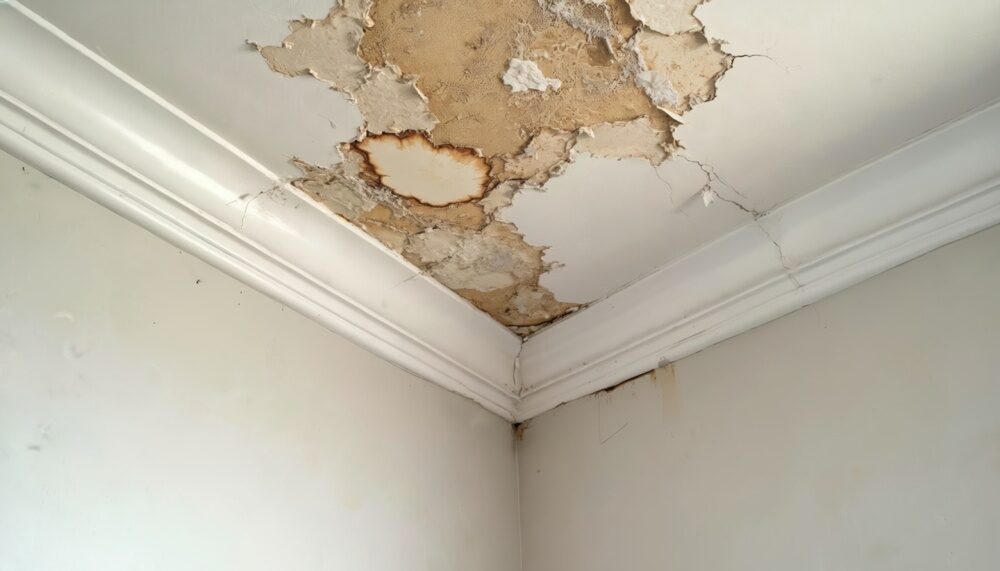
Brown ceiling stains, damp drywall, or peeling paint may indicate water entering through the roof. Moisture can travel along rafters or other building materials before becoming visible indoors.
Consequently, a stain may appear several feet from the actual entry point. Condensation and plumbing leaks can produce similar symptoms, making the source difficult to identify. A roofing professional can investigate potential roof-related causes and determine whether roofing repairs are necessary.
Roof Flashing Becomes Loose or Damaged
Flashing protects roof intersections and openings around chimneys, vents, and other penetrations. Homeowners may notice lifted metal edges, separated connections, or deteriorated sealant around these areas.
Wind-driven rain can expose gaps that may remain unnoticed during lighter rainfall. Applying sealant alone may not correct loose or improperly fitted flashing. A roofing professional can examine adjoining materials and determine whether roof repair can address the affected connections.
Storm Damage Affects Multiple Roofing Areas
Lake City thunderstorms can affect several roof slopes during the same weather event. Strong winds may weaken shingle adhesive seals, while hail can leave impact marks and debris may create punctures.
Damage may vary between slopes, making a single visible problem an incomplete picture of the roof’s condition. Storm damage to asphalt shingles can therefore require a closer professional assessment. Homeowners can photograph visible concerns from a safe location, allowing a contractor to evaluate potentially hidden damage.
Repeated Roof Leaks Continue After Repairs
A recurring leak may indicate that an earlier repair addressed the symptom rather than the actual cause. Homeowners can track whether leaks return during prolonged rainfall or only when wind drives rain against the roof.
These patterns may help a contractor narrow the investigation. The contractor can examine nearby connections, underlayment, and previous repair locations for unresolved defects. Identifying the underlying cause may prevent repeated patching and continued interior damage.
Widespread Shingle Deterioration Limits Repair Options
Individual shingle replacement may work when surrounding materials remain flexible and secure. Widespread brittleness can complicate repairs because lifting neighboring shingles may cause additional breakage.
Extensive deterioration across several slopes may also reduce the value of repeated localized repairs. A roofing professional can assess material condition, repair accessibility, and remaining service life before recommending a solution. Roof replacement may offer more dependable protection when damage affects large portions of the roofing system.
Roof Damage Creates Immediate Safety Concerns
Large roof openings, falling materials, or visible structural movement can create immediate safety hazards. Homeowners should stay off damaged roofing and keep others away from unstable areas.
If water reaches electrical fixtures, occupants should avoid the affected area and seek qualified assistance. Severe weather may also make roof access unsafe until conditions improve. Qualified professionals can assess the hazards and determine which emergency measures or repairs are necessary.
Get Ahead of Shingle Roof Damage With a Professional Lake City Roof Assessment Today
Worthmann Roofing and Gutters helps Lake City homeowners identify shingle damage and make informed repair or replacement decisions. As a GAF Master Elite contractor, our team focuses on professional workmanship and clear recommendations. Since 2015, we have served homeowners throughout North Central Florida.
We assess visible damage, investigate roofing concerns, and explain practical options based on the roof’s condition. Our roof replacements also include a Lifetime Labor Warranty covering workmanship-related problems.
Address roofing concerns before the next period of heavy rain. Contact us to discuss your roof and request a free estimate.
Frequently Asked Questions
How can I tell if my roof shingles are starting to fail?
Look for lifted edges, visible fractures, missing shingles, or bare asphalt patches. Each condition signals a different potential problem. A professional inspection can determine whether isolated repairs or more extensive work is appropriate.
Can Florida’s heat cause asphalt shingles to deteriorate faster?
Yes. Prolonged heat and ultraviolet exposure can accelerate asphalt shingle aging. These conditions may reduce material flexibility over time. Regular inspections help identify changes that could affect the roof’s performance.
Should I schedule a roof inspection after a severe storm?
Lake City homeowners should consider an inspection after strong winds, hail, falling debris, or noticeable roofing changes. Some storm damage remains difficult to see from the ground. A professional can assess the affected areas safely.
Can damaged roof shingles be repaired instead of replaced?
Contractors can often replace isolated damaged shingles when surrounding materials remain in good condition. Widespread brittleness or deterioration may limit repair options. A professional assessment can help determine the most suitable solution.