
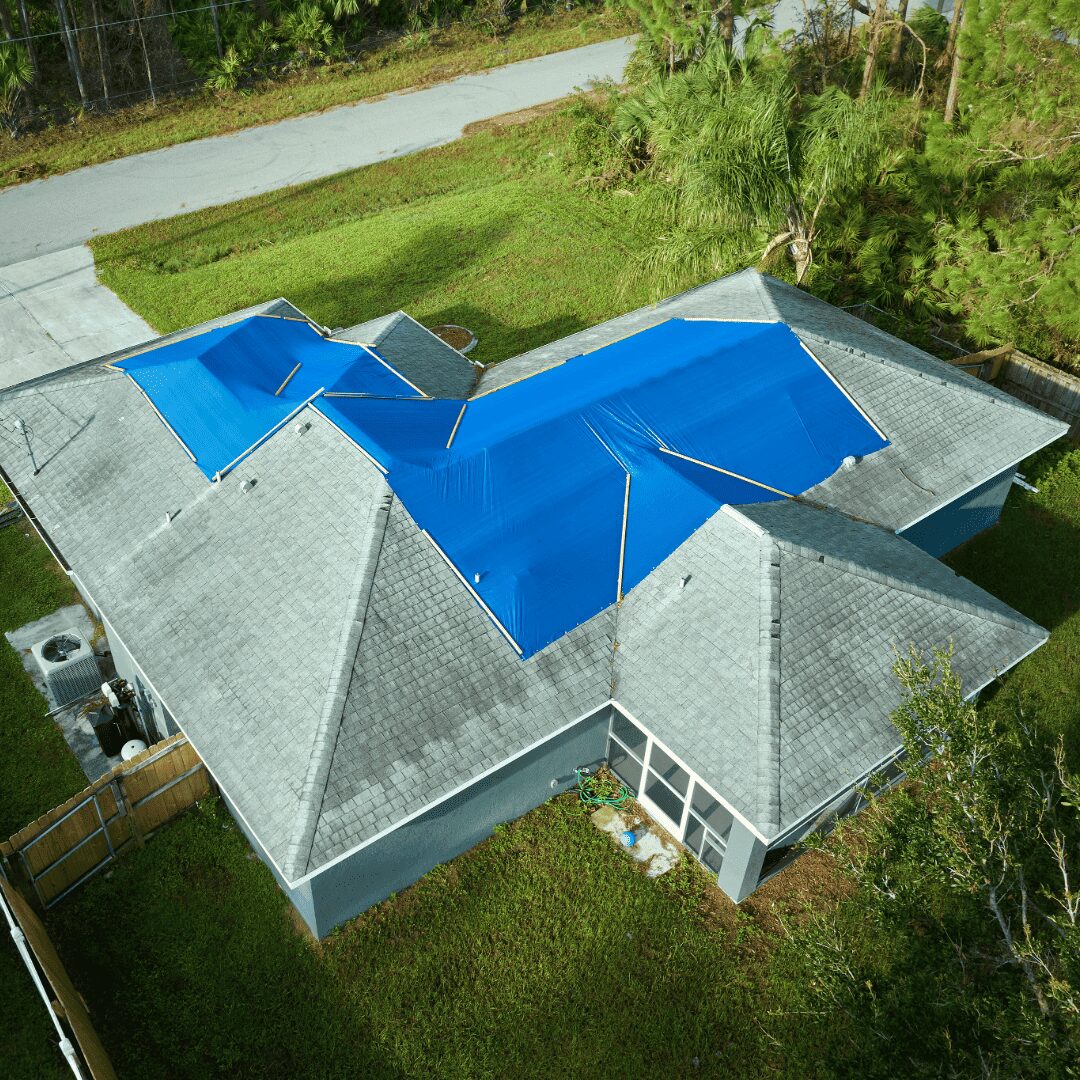
Roof tarping is one of the most important first steps after storm damage in Hawthorne, FL. Summer storms bring heavy rain, strong winds, and sudden roof leaks that worsen quickly without temporary protection. Knowing when to tarp a storm-damaged roof helps homeowners reduce risk while preparing for permanent repairs.
Key Takeaways
- Roof tarping provides immediate protection after a storm and helps prevent interior water damage.
- Signs a roof needs emergency tarping include visible leaks, missing shingles, and exposed decking after high winds.
- Properly installed tarps limit further damage from ongoing rain and protect structural components until repairs begin.
- A quick response after storm roof damage in Hawthorne limits repair costs and keeps homes safer during unpredictable weather.
How Roof Tarping Limits Storm Damage for Hawthorne Homes
Strong storms in Hawthorne cause sudden roof damage that worsens quickly without protection. Temporary solutions like tarping stabilize the roof until permanent repairs can begin.
Prevents Immediate Water Intrusion
Roof tarping blocks rain from entering exposed areas immediately after a storm. In Hawthorne, fast-moving afternoon storms often bring repeated downpours that quickly overwhelm damaged roofs. Covering these openings limits active leaks and stops water from reaching ceilings and wall cavities, especially when followed by a professional roof inspection to assess the full extent of damage.
Reduces Structural Deterioration
Water exposure weakens roof decking and framing when left unchecked. Tarping limits the amount of moisture that reaches these structural components after a storm. In Hawthorne’s humid environment, even a short delay can lead to soft decking and early rot if protection is not in place, often requiring timely roof repair to prevent deeper structural issues.
Protects Interior Finishes and Belongings
Interior damage begins as soon as water passes through the roof system. Tarping limits how far moisture spreads inside the home and helps protect insulation, drywall, and flooring. In Hawthorne homes with attic ventilation, this step also reduces the chance of moisture reaching multiple rooms.
Helps Stabilize Wind-Damaged Sections
High winds often loosen shingles without fully removing them. Tarping holds these sections in place and prevents wind from lifting larger portions of the roof. In Hawthorne, where gusts can return within days, this added stability reduces the risk of widespread shingle loss and highlights the importance of shingle replacement when damage becomes more extensive.
What to Know Before Planning Permanent Roof Repairs
After installing a tarp, the next step is to evaluate the full extent of the damage. Careful planning ensures repairs address both visible and hidden issues.
Identify the Full Scope of Damage
Storm damage often extends beyond what is visible from the ground. A detailed inspection reveals hidden issues such as soft decking or moisture trapped beneath roofing materials. Identifying these problems early, often through storm-weather damage assessments, helps prevent partial repairs that fail during future storms in Hawthorne.
Timing Matters for Repairs
Delaying repairs allows small issues to grow into larger problems. Tarping buys time, but it does not stop long-term wear from heat and humidity. In Hawthorne, scheduling repairs soon after a storm reduces the chance of repeated water intrusion during the next rainfall cycle.
Understand Insurance Documentation Needs
Insurance claims depend on clear documentation after storm damage. Photos of leaks, missing shingles, and tarp placement help establish a timeline of events. In Hawthorne, where storms can occur back-to-back, accurate records support faster claim reviews and fewer disputes, especially when following the Federal Emergency Management Agency’s guidance on documenting storm-related property damage.
Choose Materials Suited for Florida Conditions
Repair materials must withstand heat, humidity, and high winds year-round. Choosing products designed for Florida conditions improves durability and long-term performance, especially when planning a long-term roof replacement. In Hawthorne, this decision directly affects how well the roof holds up during future storm seasons.
Protect Your Hawthorne Home From Escalating Storm Damage With Immediate Roof Tarping Support
Worthmann Roofing and Gutters helps Hawthorne homeowners transition from emergency roof tarping to lasting repairs, reducing the risk of ongoing leaks, structural damage, and costly interior issues after severe storms. If your roof shows signs of storm damage or active leaks, contact us to schedule a prompt inspection and protect your home before conditions worsen.
Frequently Asked Questions
When should you tarp a storm-damaged roof?
Roof tarping should be done as soon as damage is noticed after a storm. Immediate coverage helps prevent additional water intrusion, especially during ongoing rain, and reduces the risk of further structural and interior damage.
What are the signs a roof needs emergency tarping?
Common signs include visible roof leaks, missing or lifted shingles, exposed wood decking, and water stains on ceilings. These indicators suggest the roof is vulnerable and requires temporary protection to prevent further damage.
How does roof tarping prevent water damage?
Roof tarping works by sealing off damaged areas and blocking rain from entering the home. This temporary barrier limits moisture exposure, helping protect structural components, insulation, and interior finishes until permanent repairs are completed.
What should you do after storm roof damage?
After storm damage, homeowners should document visible issues, install temporary protection, such as tarping, and schedule a professional inspection. Acting quickly helps prevent worsening damage and supports a smoother repair process.