
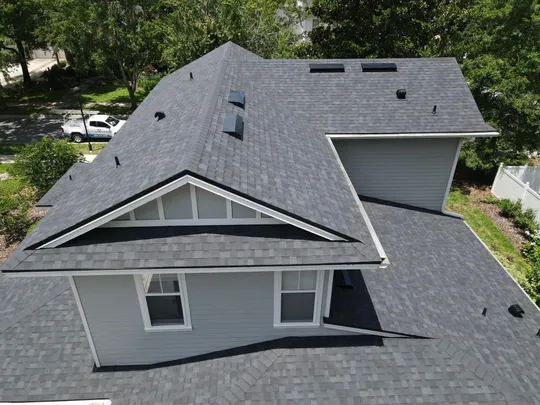
Florida heat can gradually shorten the performance life of composition roofing. Gainesville, FL homes face strong sunlight, high temperatures, humidity, and frequent weather changes throughout much of the year. These conditions can speed up asphalt shingle aging and make existing wear easier to spot. Understanding heat damage to asphalt shingles helps homeowners identify problems earlier and make informed maintenance decisions.
Key Takeaways
- Gainesville’s heat and strong sunlight can accelerate the normal aging of asphalt shingles.
- UV exposure can contribute to fading, brittleness, surface wear, and granule loss.
- Proper roof ventilation in Florida heat can help reduce excessive heat buildup beneath the roof.
- Routine inspections can identify heat-related wear before roofing problems become more extensive.
How Gainesville Heat Changes Composition Roof Performance
Gainesville roofs absorb intense sunlight for long periods. Repeated heat exposure can gradually change how composition shingles look and perform.
Prolonged Heat Can Accelerate Shingle Aging
Asphalt shingles withstand typical outdoor conditions, but prolonged heat can accelerate normal surface aging. A typical Gainesville July includes about 23 days with temperatures reaching 90 degrees or higher. That means shingles face repeated heat exposure through much of the month.
Understanding the composition of roof lifespans in Florida and how heat affects them can help homeowners recognize why ongoing roof condition matters.
UV Exposure Gradually Breaks Down Roofing Materials
Ultraviolet radiation reaches exposed roof surfaces throughout the day. Years of UV damage to asphalt shingles can cause fading and visible surface changes. Homeowners may also notice uneven coloring or worn areas as shingles age. Florida sun damage to roof shingles usually develops gradually, making a professional roof inspection useful when surface changes become increasingly noticeable.
Thermal Expansion Creates Repeated Material Stress
Roofing materials expand as temperatures rise and contract as they cool. Gainesville roofs experience these temperature changes regularly. Repeated movement can place additional stress on aging materials. Over time, homeowners may notice curling edges, surface cracks, or other changes in shingle condition.
Granule Loss Can Reduce Surface Protection
Granules help shield asphalt shingles from sunlight and weather exposure. Shingles naturally lose some granules as they age. Excessive loss, however, can expose more asphalt to heat and UV radiation. Bare areas or unusual granule buildup near downspouts may signal the need for an inspection.
Heat Can Make Aging Shingles More Brittle
Brittleness affects how shingles respond when another source of stress is applied to the roof. Less flexible shingles can crack or break more easily during wind events, debris impacts, or maintenance activities. These changes are common signs of heat-damaged shingles. When deterioration is limited to affected areas, shingle replacement may be worth evaluating as part of determining the roof’s overall condition.
Attic Heat Can Affect the Roof From Below
Heat can also build inside the attic beneath the roofing system. Excessive attic temperatures can increase heat around the roof deck during hot Gainesville days. Proper roof ventilation in Florida heat promotes airflow and helps control this buildup. Effective ventilation supports better conditions throughout the roofing system.
Maintenance Priorities for Protecting Your Roof From Heat
Protecting shingles from Florida heat requires consistent attention. A consistent roof maintenance approach can help homeowners address developing concerns before they spread.
Schedule Routine Roof Inspections
Routine inspections can reveal roofing changes that homeowners may not see from the ground. A roofing professional can examine shingles, flashing, penetrations, and other key areas for signs of wear. Inspections become especially valuable after severe weather or when an older composition roof begins to show signs of wear.
Watch for Changes in Shingle Condition
Homeowners can monitor visible roof conditions safely from the ground. Curling edges, cracks, discoloration, exposed asphalt, or unusual granule loss can indicate developing wear. Heat does not always cause these symptoms. However, noticeable changes deserve attention before they affect larger areas of the roof.
Keep Roof Ventilation Clear
Good attic airflow helps control excessive heat beneath the roof deck. Insulation, stored items, or other materials should not block ventilation openings. Each home has different ventilation requirements. A roofing professional can evaluate airflow when attic heat or ventilation performance raises concerns.
Repair Damaged Shingles Promptly
Cracked, missing, or lifted shingles need timely attention. North Central Florida often shifts from hot, humid afternoons to summer thunderstorms, with heavy downpours and strong winds possible in inland areas. Addressing storm and weather damage promptly can help protect already damaged shingles before additional wind and rain place more stress on the roof.
Maintain Gutters and Drainage Areas
Clear gutters help Gainesville roofs manage heavy rainfall after periods of intense heat. Leaves and debris can restrict drainage and hold moisture near roof edges. Regular gutter maintenance keeps water moving away from vulnerable areas. Reliable drainage also supports the roofing system throughout changing weather conditions.
Consider the Roof’s Overall Condition
A single symptom rarely tells the entire story of a roof’s condition. Roof age, previous repairs, ventilation, storm exposure, and material wear can all influence maintenance decisions. When deterioration becomes widespread, a professional roof replacement evaluation can help determine an appropriate next step based on the condition of the entire roofing system.
Have Heat-Worn Shingles Checked Before Gainesville’s Next Hot Stretch
Worthmann Roofing & Gutters can help Gainesville homeowners evaluate curling, cracking, granule loss, and other concerning shingle changes before continued heat adds more stress. An early roof evaluation can clarify the extent of the wear and identify an appropriate next step.
Contact us today to schedule a free estimate before another period of intense Gainesville heat puts additional strain on damaged shingles.
Frequently Asked Questions
How does Florida heat affect asphalt shingles?
Florida heat raises roof surface temperatures and contributes to normal material aging. Combined with UV exposure, repeated heat can gradually reduce shingle flexibility and contribute to curling, cracking, granule loss, and other visible changes over time.
What are common signs of heat-damaged shingles?
Common signs include curling edges, cracking, brittle surfaces, fading, exposed asphalt, and unusual granule loss. Several roofing conditions can cause these symptoms, so a professional inspection can help determine the likely source of deterioration.
Can roof ventilation help protect shingles from Gainesville heat?
Proper attic ventilation helps manage excessive heat buildup beneath the roof deck. It cannot eliminate outdoor temperatures or prevent normal aging, but balanced airflow can reduce unnecessary heat accumulation and support the roofing system’s overall performance.
When should Gainesville homeowners have a heat-damaged roof inspected?
Homeowners should consider an inspection after noticing widespread curling, cracking, granule loss, missing shingles, or unusual surface changes. An evaluation is also useful after severe weather or when an aging roof shows several signs of deterioration.