
In the heart of Alachua County, Gainesville homeowners know the risk of water intrusion skyrockets after a storm. If your shingles have been peeled back by wind or if a tree limb came crashing down during heavy rain, you need a temporary fix that holds until a professional can take over.
That’s where emergency roof tarping comes in—a short-term solution Worthmann Roofing frequently sees deployed across neighborhoods from Duckpond to Haile Plantation.
Below, we outline how to use a tarp to keep your home covered—and what to avoid—until professional roofing contractors arrive.
Key Takeaways
- Storm damage should be checked from the ground with a safe plan before going onto the roof.
- A tarp must fully cover the damaged area and be held down tightly with wood planks and sandbags.
- Temporary coverage needs to be watched closely for leaks while gathering photos for insurance and repairs.
- Quick professional repairs help stop mold growth and protect your home from serious water or structural damage.
Assess the Damage From a Safe Vantage Point
After a heavy August storm drops inches of rain on Gainesville—saturating rooftops from the historic downtown to quiet towns along Alachua County’s southern edge—the priority is safety.
Homeowners should never rush up to the roof. Instead, walk the perimeter of your house to observe visible storm damage.
Look for displaced shingles, leaks dripping along the middle of your ceiling, or water pooling in low portions of your property. Roofs across local cities vary in age and structure, especially near older communities where buildings date back over a century.
That means further damage can spread faster than many residents expect.
Gather Your Tools and Secure Access Before Starting
To carry out a temporary fix, you’ll need a high-quality tarp, roofing nails or staples, wood planks, sandbags, and a solid plan.
This isn’t the time to improvise. Gainesville’s climate can shift quickly—one minute you’re dealing with lingering rain, the next you’re facing scorching heat. By assembling materials in advance, you limit your risk and save money in the long run.
It’s also wise to involve another person: someone responsible, aware of the site conditions, and able to help manage access to the roof and walk with you through each step.
Carefully Walk and Inspect Before Placing the Tarp
Whether you’re protecting a home near the vibrant arts and culture corridor downtown or a family house off the beaten path in south Gainesville, safety comes first.
Carefully walk around the perimeter of the roof.
If you’re able to climb up safely, do so slowly, ensuring each step is secure.
In Alachua County, many roofs border tree-covered land, so it’s common for limbs and debris to complicate access points.
Roofers and roofing contractors stress the importance of evaluating the slope, avoiding risky climbs, and making sure no additional damage occurs during your inspection.
Clear the Roof and Identify the Problem Area
Once you’ve reached the roof, begin clearing away debris—fallen branches, leaves, or anything else that may conceal damage.
In Florida, it’s not uncommon to find sections of a roof that have lifted during a storm, even without obvious punctures. Pay special attention to roof edges and middle areas near exhaust vents and pipes.
These are common sites for roof leaks.
For homeowners near the University, where buildings are closely packed, wind flow between structures can lead to uneven water movement and obscure problem areas that aren’t immediately visible.
Lay the Tarp to Fully Cover the Damaged Sections
Now comes the core step of how to tarp a roof.
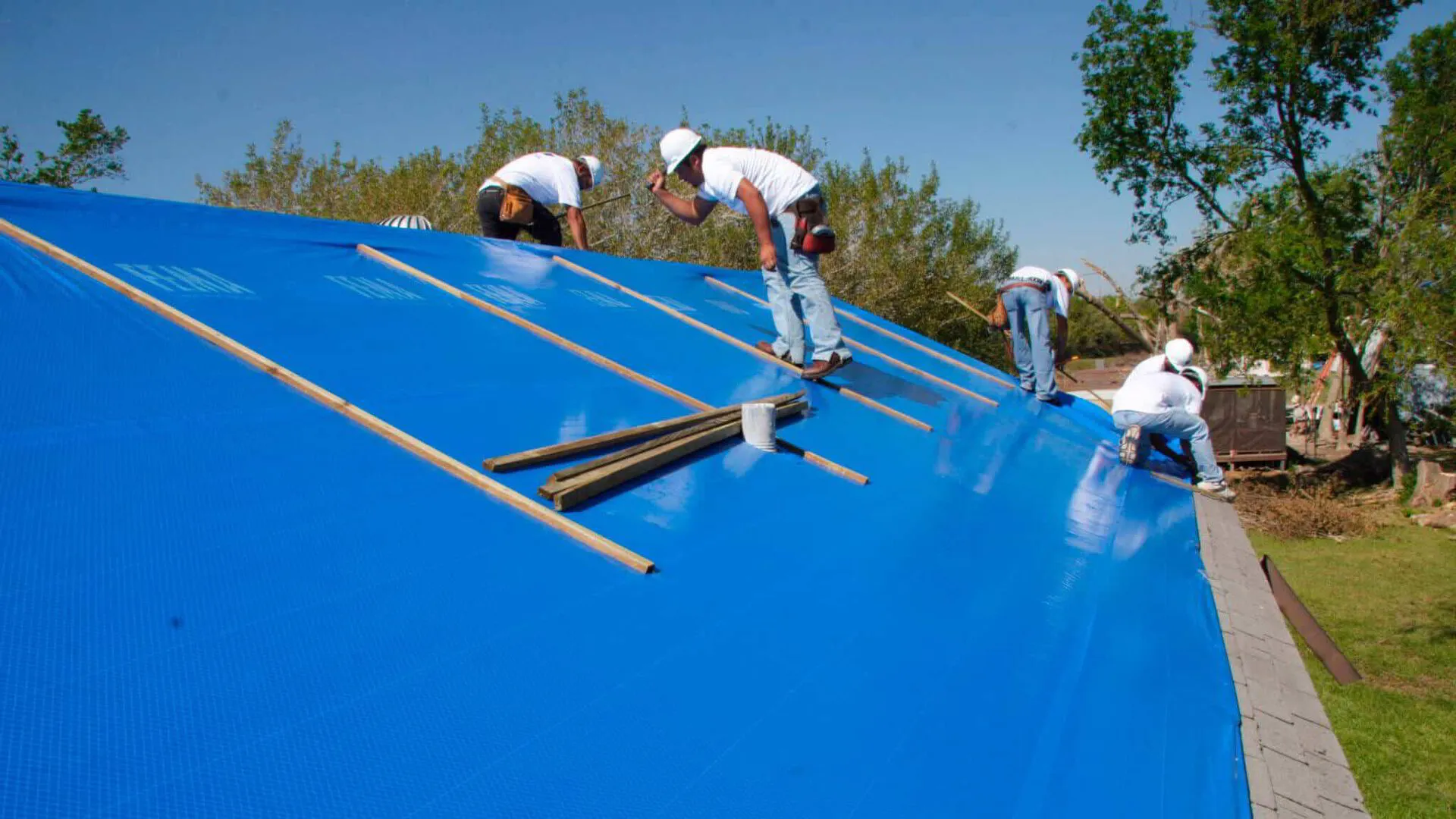
Roll out the tarp so it covers not only the visible damage but also the surrounding area—ideally extending a few feet beyond in all directions. This ensures the area is fully covered and reduces the likelihood of additional water intrusion.
In Gainesville, where visitors and residents alike are familiar with Florida’s wild weather swings, covering every vulnerable section is essential.
Consider it a wrap that protects your home, office, or rental property from more severe consequences while you wait for professional roof repairs.
Secure the Tarp with Wood Strips, Nails, and Sandbags
Secure the tarp by nailing it to wood planks laid over the edges. This creates tension, reducing the risk of the tarp flapping or detaching in the wind.
Sandbags placed on the corners and edges add an additional layer of protection. Roofers working in cities throughout North Central Florida know the importance of securing tarps against sudden weather shifts.
Whether you live near a swimming facility, busy restaurants, or hotels frequented by university sports fans, added weight prevents movement that can lead to further structural compromise.
Monitor the Situation and Plan for Professional Repairs
Your tarp is only a temporary shield.
Once it’s in place, you’ll want to monitor interior ceilings for spreading leaks, document every detail with photos, and plan to contact licensed roofing contractors. Delaying repairs can lead to mold, insulation rot, or worsening of the roof’s form.
For property owners who rent to students or travelers, timely repairs also protect your investment.
Every responsible homeowner or business owner should have a plan in place after each severe weather event—especially in regions like Gainesville, where storms move in fast and often.
Why Professional Repair Should Follow Quickly
A Temporary Fix Can’t Address Structural Damage
Tarping is a fast, responsible action, but it can’t replace roofing expertise. In communities like Duckpond, where many homes have century-old rooflines, underlying damage may go unnoticed beneath the surface.
Only certified roofers can assess decking, ventilation, and structural integrity thoroughly.
Insurance Often Requires Documentation From Roofing Contractors
Most insurance policies require a licensed roof inspection to validate emergency actions taken by the homeowner. That includes written documentation and photos showing the damage, the tarp placement, and steps taken to protect the site.
These details can significantly affect insurance claim outcomes, especially for homeowners managing costs and risk across multiple properties or buildings.
Florida Weather Increases the Risk of Mold and Internal Water Damage
Snow might not be a concern in Florida, but humidity certainly is.
In as little as 48 hours, moisture trapped beneath insulation or drywall can lead to mold. Even one slow drip—especially during the fall season when afternoon storms are common—can cause long-term problems.
Quick professional repair helps protect your home’s health and future resale value.
Unsecured Tarps Can Detach and Cause More Damage
A poorly secured tarp can blow off in strong winds and lead to exposed underlayment or additional roof punctures.
That’s why every tarp should be carefully positioned, sealed, and monitored until permanent repairs are made. Innovation in roofing materials has improved over the years, but nothing replaces hands-on expertise.
Safety Risks Multiply the Longer You Wait
Every additional day spent on a makeshift solution increases personal risk, especially if the homeowner continues to walk on a damaged roof or attempt repairs alone. Our employees are trained, insured, and experienced in managing storm response safely.
There’s no reason to take on this responsibility yourself when Worthmann Roofing is ready to lead the repair process.
Gainesville’s Roofing Experts Are Ready to Help
From Gainesville’s historic downtown to the outer edge of Alachua County, Worthmann Roofing is the local name residents trust. We’ve helped protect homes, offices, and properties in every quarter of the city—from sports facilities to innovation hubs, from live-work buildings to family homes.
Backed by verified reviews, decades of experience, and the professionalism of our employees, we’re ready to help you repair and restore your roof—no matter the extent of the damage. Everybody deserves to feel safe in their home.
Call at (352) 472-3228 to request a quote today.
Let’s protect what matters—together.
Frequently Asked Questions
What if my home in historic downtown Gainesville has multiple roof slopes or intersecting sections?
Homes in historic downtown often feature steep slopes and valleys. Our team handles tarp placement for complex roof shapes to avoid missed areas and reduce costly water damage during storms.
Can you inspect multiple properties I’ve owned across Alachua County?
Yes, we inspect and protect all roof types across Alachua County. Whether you’ve owned residential streets or commercial lots, we secure each site based on structure type, roof age, and access needs.
Is it safe to tarp roofs near streets with high traffic or limited access?
Tarping near busy streets or shared buildings can be risky. Our crews use safety plans designed for urban interest areas and tight spaces to protect people, property, and structures effectively.
Do you handle emergency repairs for athletic sheds or lacrosse equipment storage?
Yes, we service owned sheds and specialty buildings like lacrosse equipment units. We assess storm impact, secure damaged roofs, and plan repairs that fit your site, schedule, and storage priorities.